
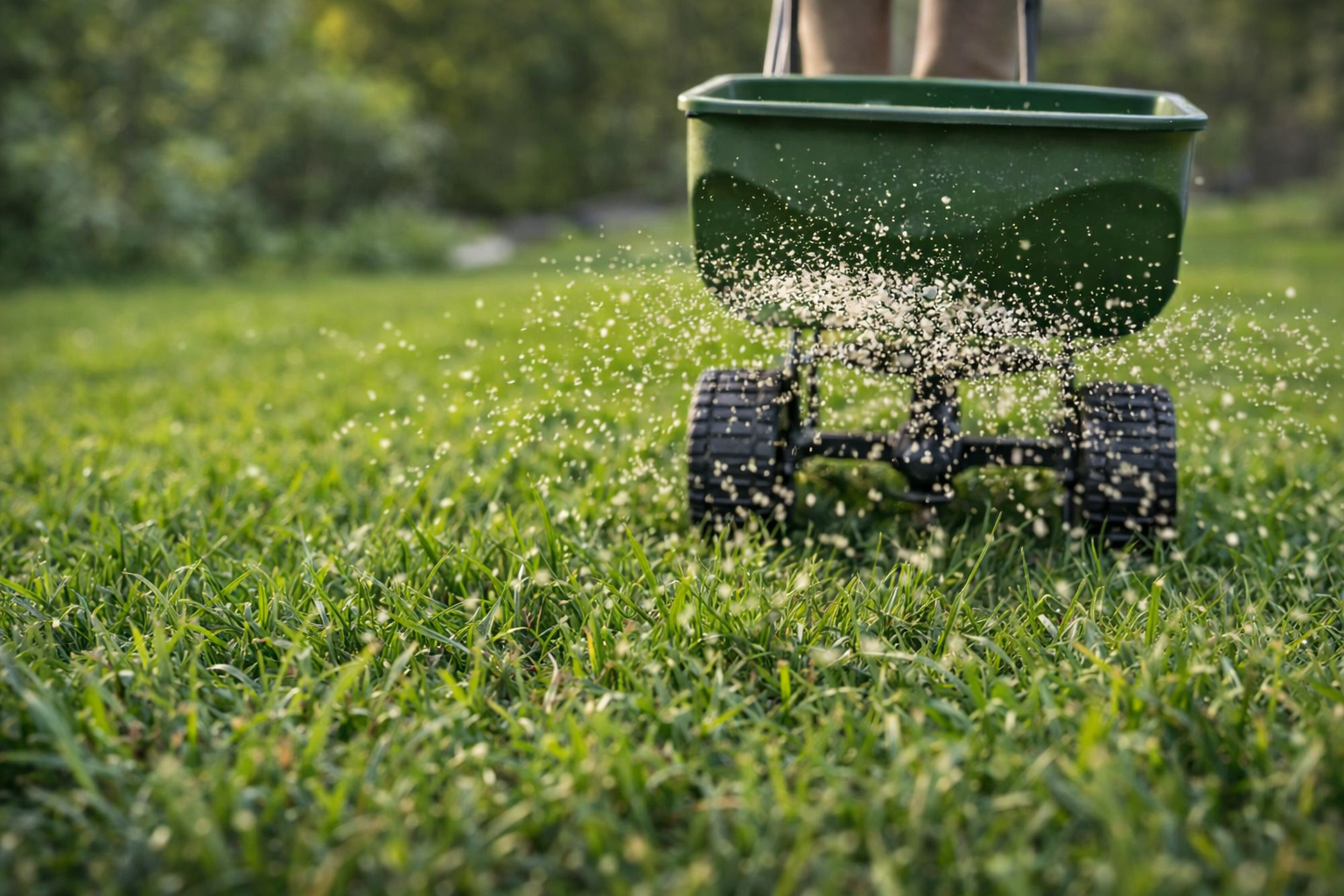
Why Fertilizing Your Lawn Is Important
A healthy lawn doesn’t happen by accident. Fertilization plays a key role in keeping grass thick, green, and resilient throughout the year. Proper fertilization supplies essential nutrients that help grass develop strong roots, maintain consistent color, and recover from stress caused by heat, foot traffic, and seasonal changes.
When lawns are not fertilized correctly, they often become thin, discolored, and more vulnerable to weeds, insects, and disease. Over time, nutrient deficiencies weaken turf and create conditions where weeds can take over.
Fertilizing your lawn supports long-term health, improves appearance, and helps your grass withstand environmental stress common in CSRA lawns.
How Often Should You Fertilize Your Lawn?
Most lawns benefit from 3 to 5 fertilizer applications per year, depending on grass type, soil condition, and local climate. Fertilizer should be applied during active growth periods, not during dormancy.
For warm-season grasses commonly found in the CSRA, fertilization is focused on late spring through early fall.
Seasonal Lawn Fertilization Schedule
Spring Fertilization (March–May)
Spring fertilization helps grass recover from winter dormancy and prepares it for active growth.
For warm-season grasses, wait until the lawn is fully green before applying fertilizer. This usually occurs in mid to late spring.
Best practice:
- Use a balanced, slow-release fertilizer
- Avoid fertilizing too early, which can encourage weeds
- Focus on steady growth, not rapid top growth
Summer Fertilization (June–August)
Summer brings heat, drought stress, and increased foot traffic. Fertilization during this period helps lawns stay dense and resilient.
Best practice:
- Apply fertilizer once or twice during summer
- Use lower nitrogen levels to prevent burning
- Water properly to reduce stress on turf
Over-fertilizing in extreme heat can damage grass, so timing and product selection are critical.
Fall Fertilization (September–November)
Fall fertilization supports root strength and nutrient storage for the following growing season.
For warm-season grasses, nitrogen levels should be reduced while potassium is increased.
Best practice:
- Use a fertilizer higher in potassium
- Avoid heavy nitrogen applications late in the season
- Focus on root health rather than blade growth
Winter Lawn Care (December–February)
Warm-season grasses enter dormancy during winter and do not require fertilization.
Expert tip:
Winter is a good time to apply lime or soil conditioners if a soil test shows pH imbalance. This prepares the soil for spring growth.
Types of Lawn Fertilizers
Synthetic Fertilizers
Synthetic fertilizers are formulated to deliver nutrients quickly and precisely.
Benefits:
- Fast results
- Easy application
- Ideal for correcting nutrient deficiencies
Considerations:
- Overuse can cause runoff or turf damage
- Requires careful application and timing
Organic Fertilizers
Organic fertilizers release nutrients slowly as they break down in the soil.
Benefits:
- Improves soil structure
- Supports long-term lawn health
- Environmentally friendly option
Considerations:
- Slower results compared to synthetic products
- Best used as part of a long-term lawn care plan
Expert Tips for Proper Fertilizer Application
Follow Correct Application Rates
Always follow label instructions. Applying too much fertilizer can burn grass and lead to nutrient runoff, while under-application may not deliver enough nutrients.
Using a broadcast or drop spreader ensures even coverage and consistent results.
Reduce Environmental Impact
Fertilizer runoff can pollute nearby waterways.
Best practices include:
- Avoid fertilizing before heavy rain
- Keep fertilizer off driveways and sidewalks
- Choose slow-release products when possible
Responsible fertilization protects both your lawn and the surrounding environment.
Final Thoughts on Lawn Fertilization
Fertilizing your lawn correctly is one of the most effective ways to maintain thick, healthy turf year-round. By following a seasonal fertilization schedule and choosing the right products, you can strengthen your lawn, reduce weed pressure, and improve overall appearance.
A well-fertilized lawn not only looks better but also performs better, creating a durable and enjoyable outdoor space for your home.