
A healthy lawn does more than improve curb appeal—it creates a functional outdoor space, supports soil health, and increases property value. Thick, healthy grass also plays an important environmental role by reducing erosion, improving air quality, and supporting beneficial organisms.
Achieving a healthy lawn, however, requires more than routine mowing. Lawns face ongoing challenges from pests, disease, soil issues, and one of the most persistent problems homeowners encounter: lawn weeds.
When weeds are left untreated, they compete aggressively with grass for sunlight, water, and nutrients, quickly turning a once-green lawn into a thin, uneven surface. This guide explains the most common lawn weeds, how to identify them, why they spread, and the most effective strategies for eliminating them.
Common Lawn Weeds and How to Identify Them
Dandelions
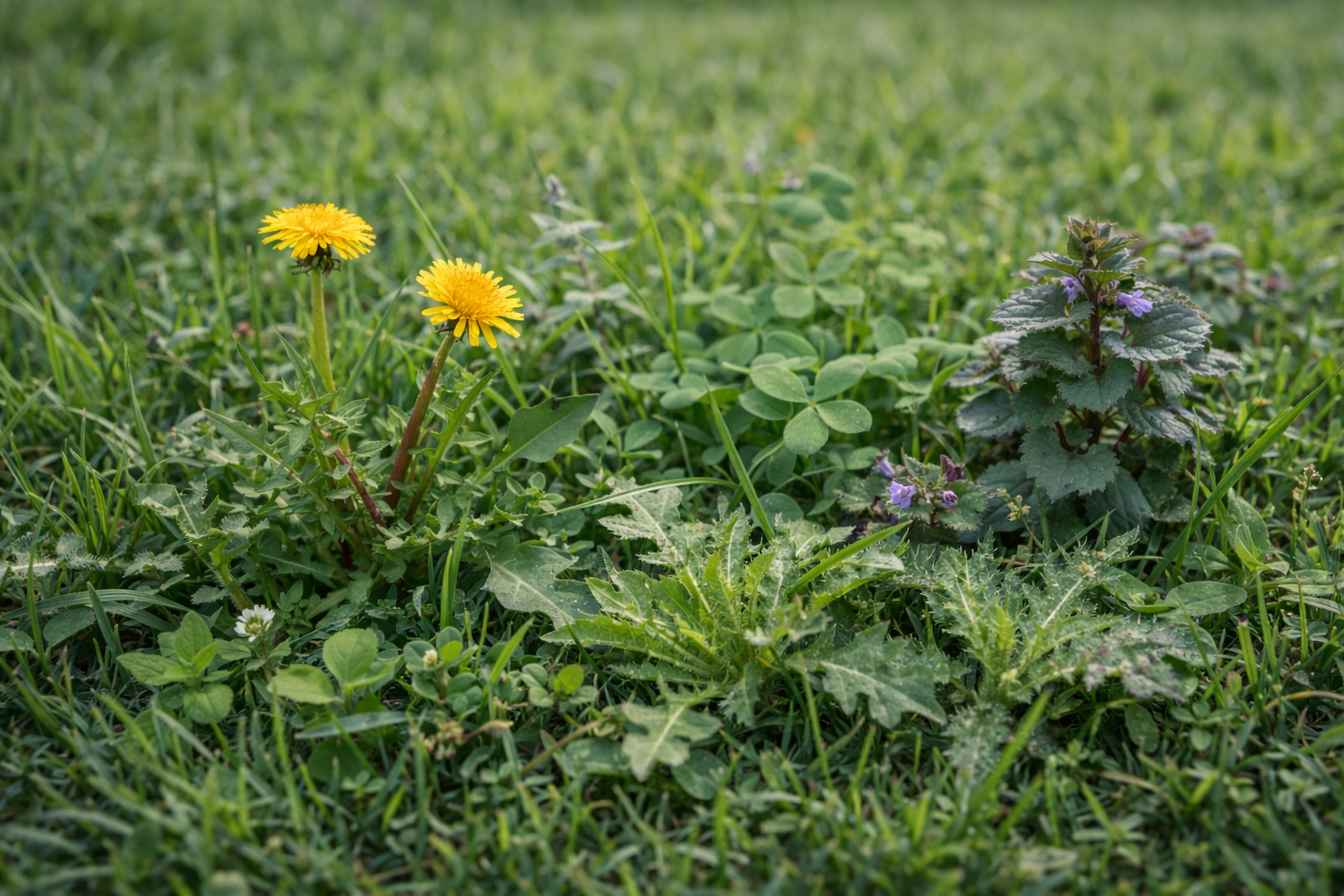
Dandelions are easily recognized by their bright yellow flowers and jagged leaves. They spread rapidly by wind-dispersed seeds and develop deep taproots that make removal difficult.
Why they’re a problem:
- Shade surrounding grass
- Disrupt soil structure
- Spread quickly if untreated
Crabgrass
Crabgrass is a fast-growing annual weed with coarse blades and low-growing stems that resemble crab legs. It thrives during warm weather and quickly dominates thin or bare areas of a lawn.
Why it’s a problem:
- Chokes out turfgrass
- Creates uneven patches
- Leaves bare soil after dying off
Clover
Clover has three-part leaves and produces small white or pink flowers. While it fixes nitrogen in the soil, it spreads aggressively and disrupts uniform turf appearance.
Why it’s a problem:
- Indicates nutrient-poor soil
- Reduces turf density
- Attracts bees to lawns
Chickweed
Chickweed forms dense, low-growing mats with small white flowers and thrives in cool, moist conditions.
Why it’s a problem:
- Smothers grass
- Signals poor drainage or compacted soil
- Spreads rapidly in spring and fall
Creeping Charlie (Ground Ivy)
Creeping Charlie spreads through creeping stems and prefers shaded, damp environments. Its scalloped leaves and purple flowers make it easy to identify.
Why it’s a problem:
- Forms dense carpets
- Competes aggressively with turf
- Thrives where grass struggles
Bindweed
Bindweed is a vining perennial with trumpet-shaped flowers and deep root systems.
Why it’s a problem:
- Twines around grass and plants
- Extremely difficult to eliminate
- Requires systemic treatment
Quackgrass
Quackgrass is a perennial grassy weed that spreads through underground rhizomes.
Why it’s a problem:
- Rapidly spreads underground
- Outcompetes turfgrass
- Difficult to control once established
Thistle
Thistles are broadleaf weeds with spiny leaves and aggressive growth habits.
Why it’s a problem:
- Competes for nutrients and water
- Considered noxious in many regions
- Spreads quickly if untreated
Plantain
Plantain has broad leaves and strong fibrous roots, allowing it to survive mowing and foot traffic.
Why it’s a problem:
- Competes with grass
- Spreads by seed and root fragments
- Thrives in compacted soil
Nutsedge
Nutsedge is a fast-growing weed that thrives in wet soil and spreads through underground tubers.
Why it’s a problem:
- Grows faster than turfgrass
- Regenerates easily after removal
- Indicates drainage issues
Effective Lawn Weed Control Strategies
1. Identify the Weed Before Treating
Correct identification is critical. Broadleaf weeds, grassy weeds, and sedges all require different treatment methods. Treating the wrong weed wastes time and can damage healthy grass.
2. Mow and Water Properly
- Maintain grass height between 2.5–4 inches
- Water deeply but infrequently (about 1 inch per week)
- Avoid overwatering, which encourages weeds like nutsedge
Healthy turf naturally crowds out weeds.
3. Address Recurring Weed Problems
Persistent weeds often indicate deeper issues such as:
- Poor soil health
- Compaction
- Improper watering
Soil testing and targeted treatments can correct these conditions and prevent future infestations.
Conclusion: Building a Weed-Resistant Lawn
Weeds like dandelions, crabgrass, clover, and nutsedge are among the most common challenges homeowners face. Each weed spreads differently, but all share one goal: competing with grass for essential resources.
The most effective lawn weed control strategy combines:
- Early identification
- Proper mowing and watering
- Targeted treatments
- Long-term lawn health practices
By focusing on prevention and consistent care, homeowners can create conditions where grass thrives and weeds struggle to survive.